From Pixel to Pigment: A Decade with Impressionism
- EN
- ZH-CN
In early 2026, at the “INTO THE MODERN” Impressionist exhibition in Singapore, I stood before an original Monet for the first time.
Layers of pigment were stacked high, brushstrokes clearly visible, as if freezing a moment of shimmering dawn or fading dusk from a century ago. At that moment, my mind drifted back to a quiet Sunday exactly ten years prior (2016). I was sitting in front of a computer, flipping through images on the screen one by one, selecting paintings to present for my art class. The theme was “From Tradition to Modernity.” At that time, the word “Impressionism” was still foreign to me, and I could never have imagined that one day I would come face to face with these masterpieces that had once only existed for me as pixels.
Although the exhibition did not feature Monet’s most famous works, it was unexpectedly comprehensive: Monet, Renoir, Sisley, and Cézanne. These four young men, who once studied together at Gleyre’s Studio, were now reunited through their paintings. Monet’s work featured paint as thick as relief sculpture; you could clearly see the brushstrokes piled into heavy clumps. Renoir bathed faces in soft light, luminous yet hazy. Sisley’s landscapes were tranquil and restrained. As for Cézanne, I didn’t have much of an impression of him…
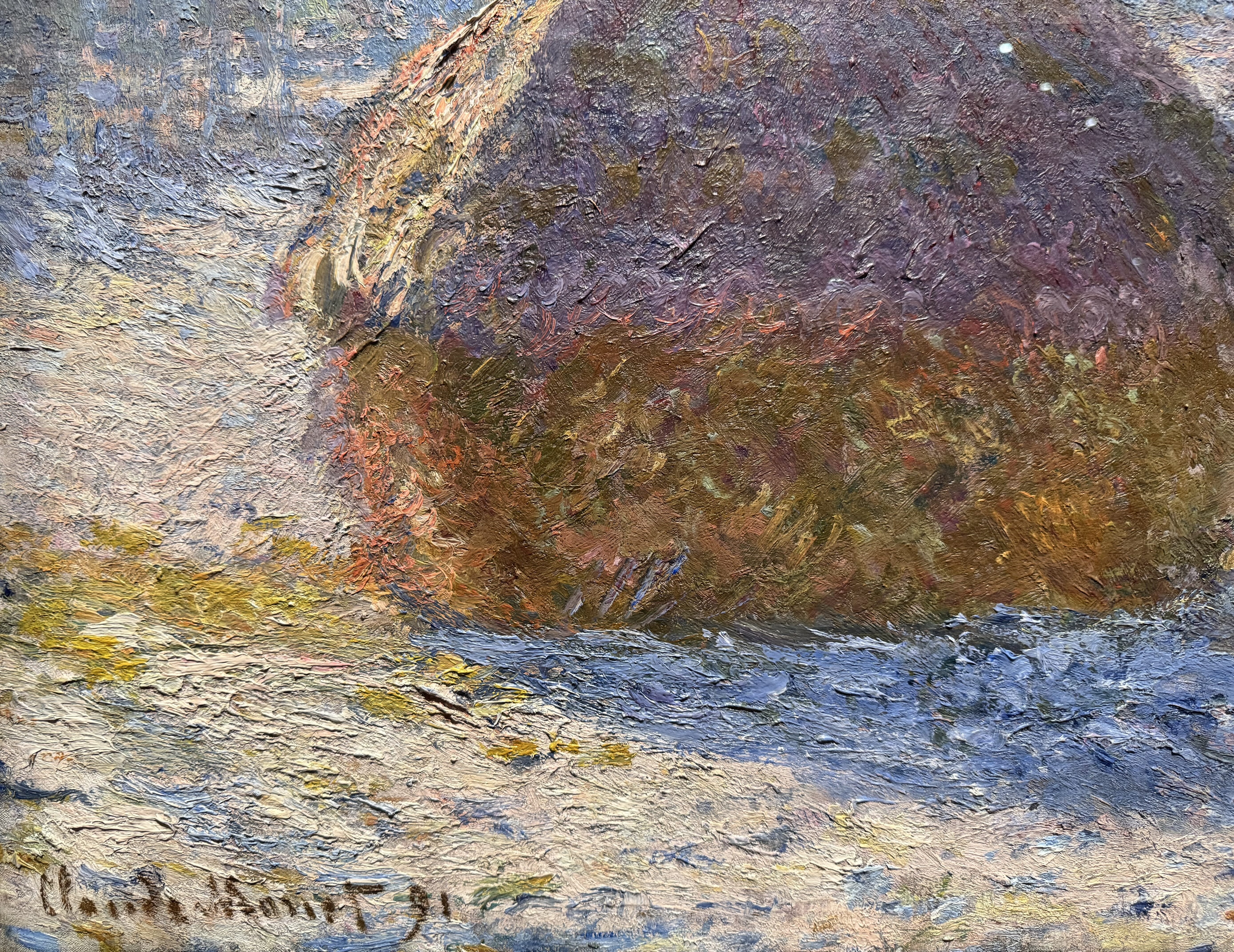
(Paint as thick as relief sculpture; brushstrokes clearly visible in heavy clumps)
The biggest surprise of the exhibition for me was Paul Signac. While his colors retained the flavor of Impressionism, his technique was entirely different. There were no sweeping brushstrokes on the canvas, replaced instead by countless, meticulous tiny dots of color. Later, I learned that Paul Signac was a representative painter of “Pointillism.”
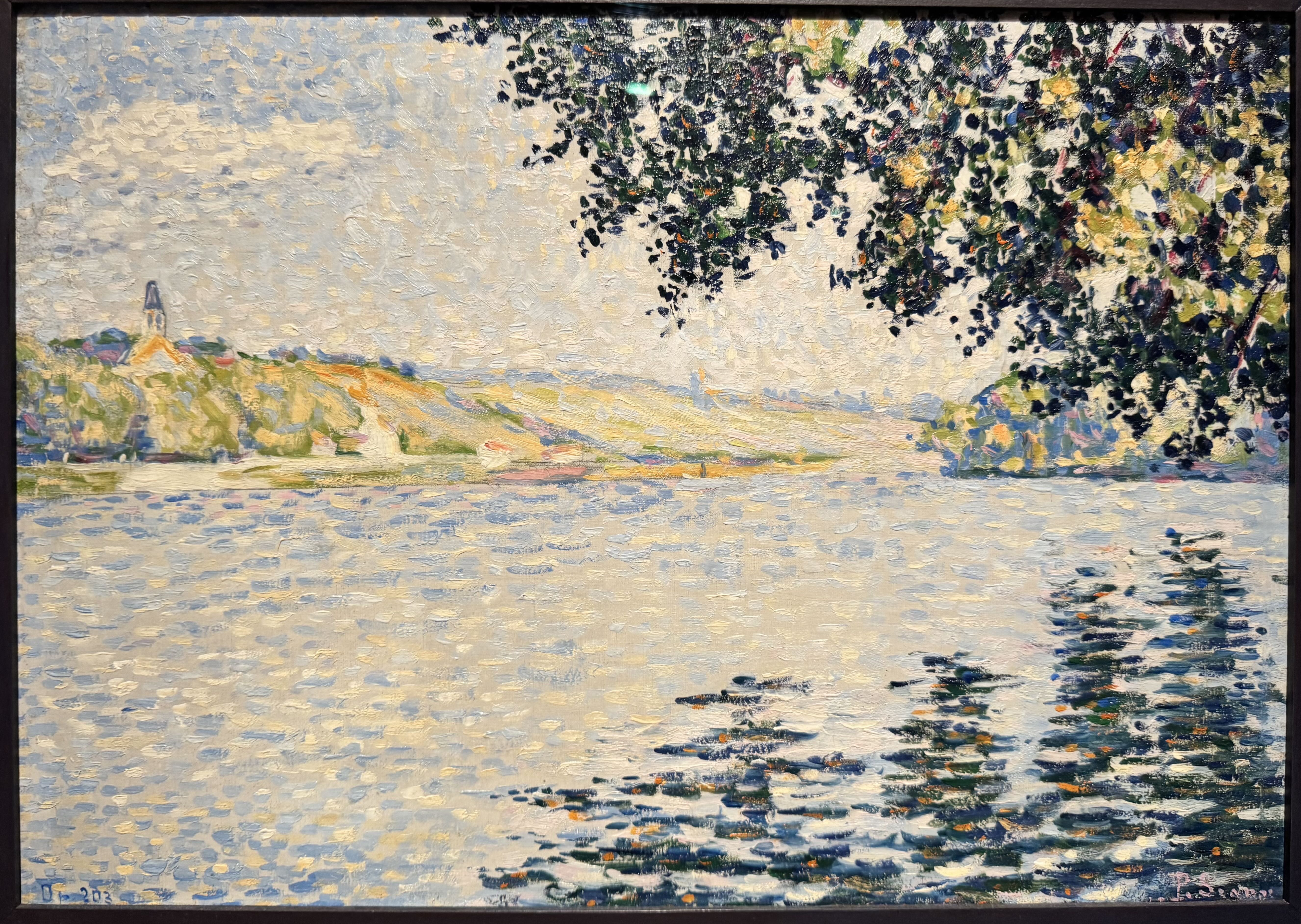
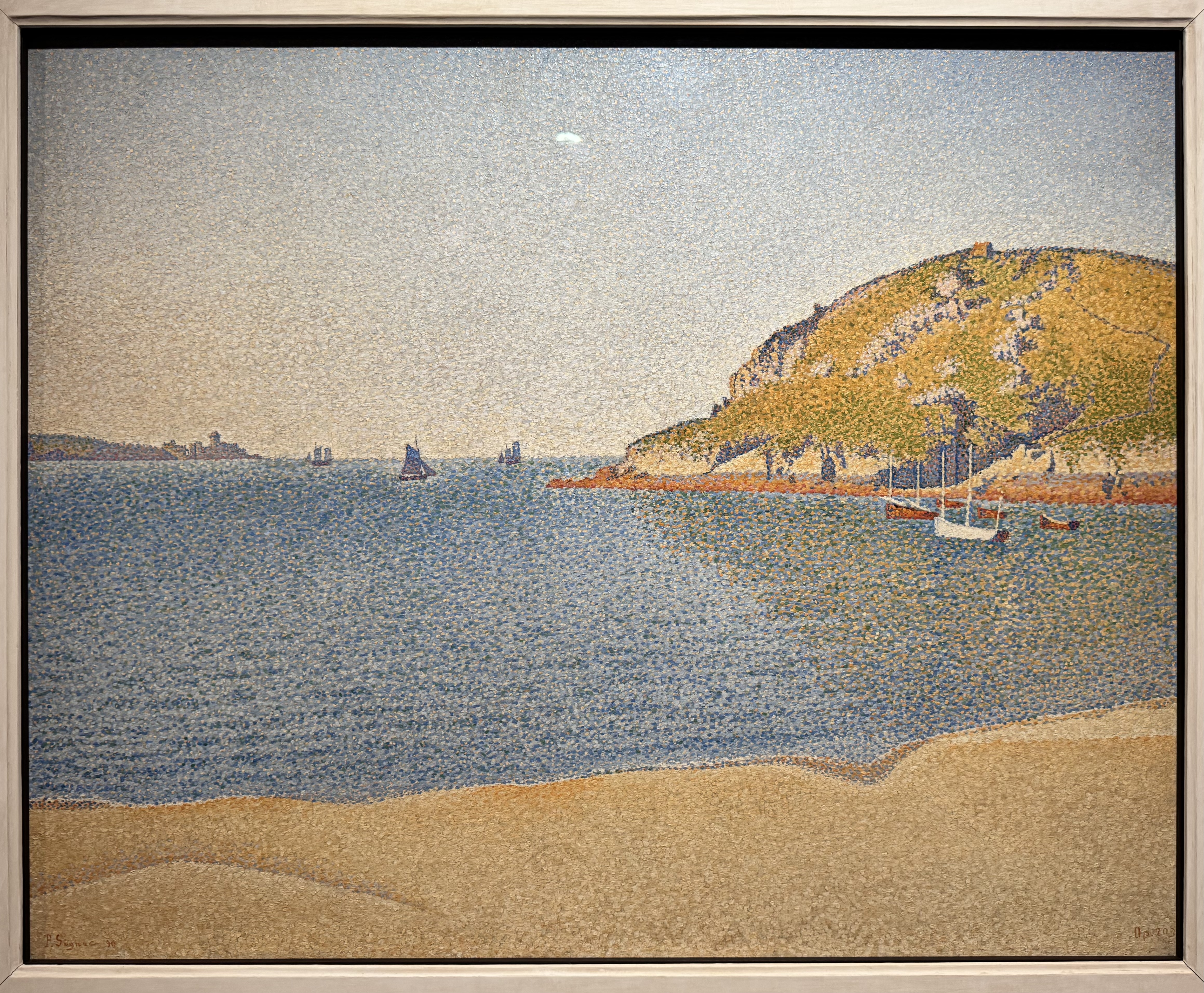
Standing in the gallery, my memory flowed back to that high school student trying to explain “From Tradition to Modernity” in a PowerPoint presentation. Back then, I understood these works solely through Wikipedia and a few images, easily applying a label to each movement:
- Neoclassicism pursued rigorous composition and scientific perspective, but later fell into empty, dogmatic forms;
- Romanticism sought the sublime in mythology and passion, eventually sliding into emotional exaggeration;
- Realism turned its gaze to the common people and daily life, yet failed to break through the framework of traditional narrative;
- Impressionism broke free from the studio to capture fleeting light and color, yet in its obsession with visual impressions, almost forgot the structure of form;
- Post-Impressionism turned completely inward: Van Gogh burned with inner fire, Gauguin fled to symbolic shores. They no longer sought “how the world looks,” but turned to “how I feel the world.”
- ……
The exploration of beauty never ceases. Ten years have passed, and I am no longer just reading a smoothed-over version of history across a screen. Now, standing before the originals, I truly felt that chaotic, intense, and uncertain process of creation. Beyond the shock of the color and brushwork, there was a deep historical resonance. I was not only conversing with the artists, but I was also conversing with myself.
The modern path of art is inherently a constant fission and recombination between reason and sensibility, order and freedom.
Behind the canvases are living, breathing people. Amidst doubt and loneliness, they still chose to believe their own eyes.
“There really is no such thing as Art. There are only artists.”
— E. H. Gombrich, The Story of Art